The Big Volo Showdown
One studio. 18 trainees. An unforgettable finale.
It all began with just a date, a studio, and the assignment to create a final project as a “calling card” for the ZDF. No concept, no plan — only plenty of ideas and the ambition to make something truly special. One thing was clear from the very start: this would be big. Challenging. And one of a kind.
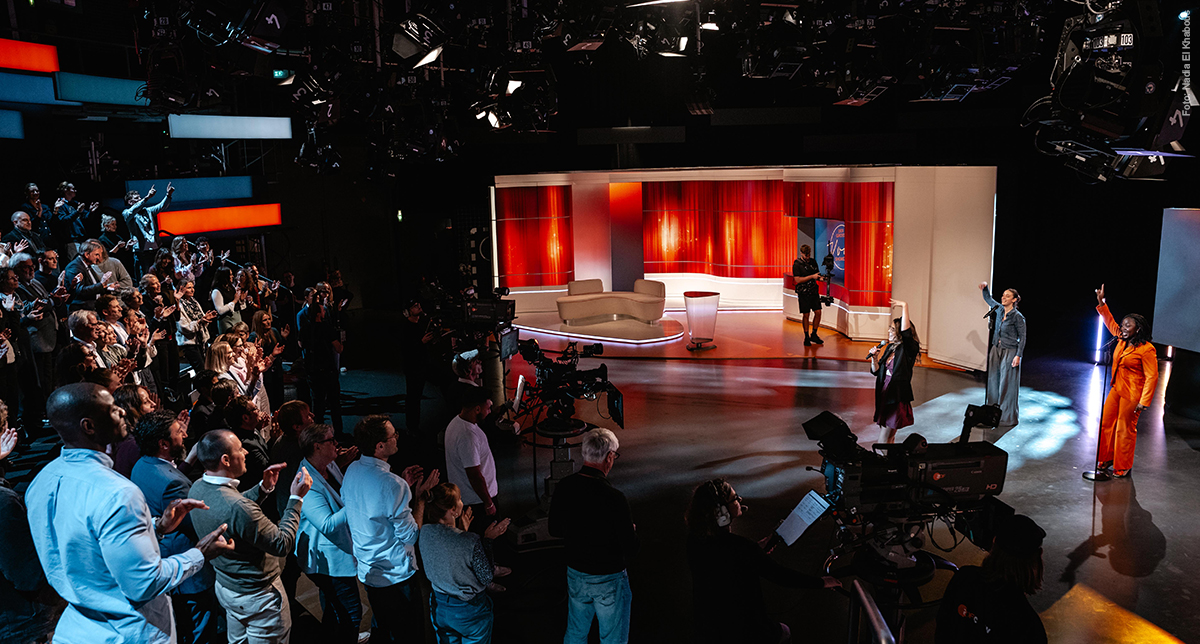
Eight months later, 18 ZDF editorial trainees stood before an audience of around 100 guests — colleagues from every division, friends, and family. The result: standing ovations and thunderous applause.
How chaos became structure — and ideas turned into reality
From the outset, it was clear that we wanted more than just a show. We aimed for a holistic concept — studio, stream, distribution, and the human component, all thought of as one. To make that happen, we organized ourselves. Instead of getting lost in the details, a core team quickly formed, creating structure, setting deadlines, and ensuring that all the invisible gears worked together seamlessly — from safety management to budgeting to production scheduling. This allowed everyone in the trainee group to contribute according to their individual strengths.
Together with Tobias Bluhm, I took on project leadership — with everything that entails: prioritizing tasks, moderating processes, coordinating teams, and ensuring transparent decision-making. While everyone was working in different editorial departments throughout the year, our job was to pull all the strings together and make sure the show became more than just a final event — something that demonstrated what we could achieve together.
And that’s exactly what it became: 90 minutes of live programming, performed on stage and streamed internally — filled with energy, humor, and heart. It felt magical.
Showtime: Our grand Volo finale
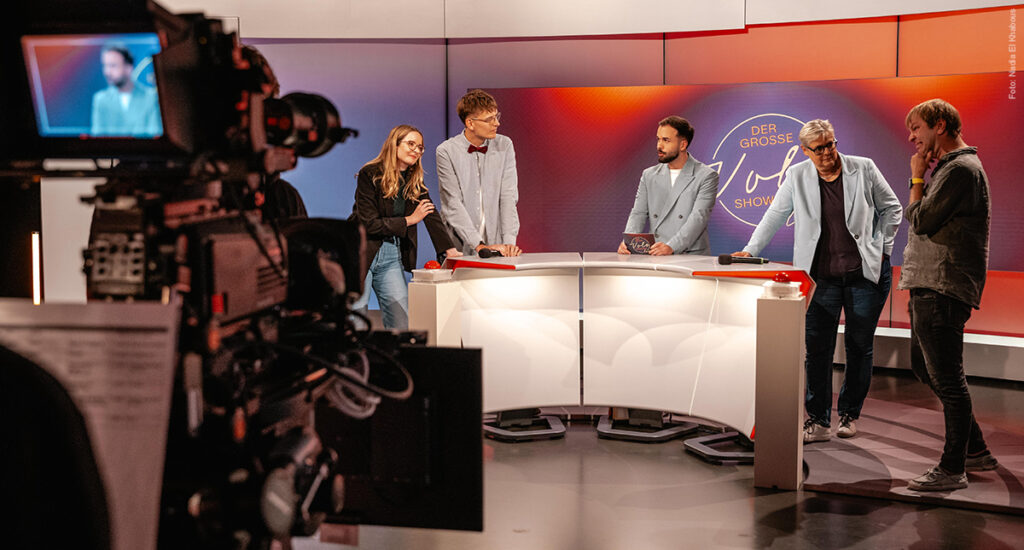
As guests entered the studio, a 23-minute film I had produced played on screen — featuring interviews and archive footage of all 18 trainees, serving as a cinematic reflection on two years of training. Sarah Danquah, together with Mainzelmännchen Det, warmed up the audience before Christian Hauser and Marie Scholl officially opened the show. They guided viewers through the program with charm, interaction, humor, and plenty of playful moments.
Laura Ozdoba presented a fast-paced supercut condensing two years of training into just a few minutes, while Dina Bogdanski and Sarah Danquah humorously introduced every single trainee in a witty PowerPoint presentation. The fiction trainees — Eliane Wikert, Sinem Kicirti, Leontina Klein, Sarah Touihriat, and Leon Wille — presented their short film “Der letzte Platz” in a live talk. Johannes Lieber and Patrick Müthing hosted a three-part chart show highlighting our best behind-the-scenes moments. Ziyad Farman conducted a live interview with our training manager Sonja Schünemann, without whom none of this would have been possible.
Next came live segments with Alina Reissenberger and Patrick Müthing in the studio, a football goal-shootout between Stefan Leifert and Bobby Cherian in true Sportstudio style, moderated by Tobias Bluhm, and a ZDF quiz between Team Volo (Laura Ozdoba & Johannes Lieber) and the ZDF Allstars Beate Thewalt and Jörn Ratering, hosted by quizmaster Christian Hauser.
The grand finale: a live performance of our original Volo song, performed by Leontina Klein and produced by Kolja Hirdes — a true goosebump moment.
Behind the scenes, countless people contributed to making this show possible: from guest management, make-up, and props to photography, production, camera work, and directing — without them, no picture would have flickered on screen and no sound would have reached the audience. Special thanks to Götz Brandt and Markus Kainz, who worked with us countless times to figure out how to turn our wildest ideas into reality.
After the show, the afternoon concluded with a get-together in the foyer — featuring snacks, drinks, networking, a cinema screening of the fiction short film, and an exclusive ZDF tour for external guests.
What remains after the applause fades
Big projects require organization but they thrive on trust, people who take responsibility, and the courage to try new things, even without knowing if they’ll work. This show was no automatic success — it was a collective effort that proved just how much is possible when people rely on each other.
What remains is deep gratitude and the feeling of having been part of a team that didn’t just produce television, but created an unforgettable shared experience.